
Who (and What) Is VENU?
Venu Holding Corporation (“VENU”) is a US-based, publicly traded company listed on the NYSE American under the ticker VENU. It describes itself as a fan-founded, fan-owned, and artist-inspired business that builds, owns, and operates reimagined premium live-entertainment and hospitality destinations across the United States.
Headquartered in Colorado Springs and led by founder and CEO J.W. Roth, VENU’s strategy is to go beyond the traditional concert arena model. Instead of just selling tickets to shows, the company develops entire entertainment destinations that blend music, hospitality, real estate, and immersive fan experiences.
What Does VENU Actually Do?
VENU focuses on building and operating upscale live-music venues paired with premium hospitality offerings. Its portfolio includes amphitheaters, music halls, clubs, restaurants, and event spaces, with locations operating or in development across states such as Colorado, Georgia, Oklahoma and Texas.
Key elements of VENU’s model include:
- Premium amphitheaters & music venues – outdoor and indoor spaces designed for major tours, residencies, and special events.
- Hospitality & clubs – high-end clubs and lounge concepts (such as branded clubs and members’ areas) integrated into the venues.
- Luxe FireSuites – luxury suites and “FireSuite” products sold or leased to high-spend fans and partners, often via traditional sales, fractional ownership, financing, or triple-net lease structures.
- Real-estate development – acquiring, building, and monetising entertainment-led real estate around its venues.
- Content & programming – working with promoters such as AEG Presents to bring in shows, and increasingly adding proprietary in-house programming.
A big part of VENU’s pitch is that these destinations should be active year-round. Rather than a summer-only concert schedule, the company talks about an “omni-content” approach: residencies, theatrical productions, festivals, special events, and branded experiences that keep venues busy in all seasons.
Financial Snapshot (Q3 2025)
VENU is still very much a growth-stage company. According to its third-quarter 2025 results (for the period ended 30 September 2025), the business is scaling rapidly but has not yet reached consistent profitability.
- Total assets: approximately $314.8 million, up about 76% from year-end 2024, driven largely by investments in property, equipment, and venue build-outs.
- Property & equipment: roughly $250 million, an increase of more than 80% versus the end of 2024.
- Luxe FireSuite & club sales: more than $90 million in cumulative sales through 30 September 2025, up strongly year-on-year.
- Revenue: net revenue from amphitheater operations and naming-rights agreements increased versus th2e prior year period, with double-digit growth.
- Profitability: the company still reports a net loss for the first nine months of 2025, reflecting heavy investment in new venues and infrastructure.
In short: VENU is growing fast in terms of assets, venues, and premium
product sales, but it is still in an investment phase where it is
prioritising expansion over short-term profits.
Niall Horan’s Role at VENU
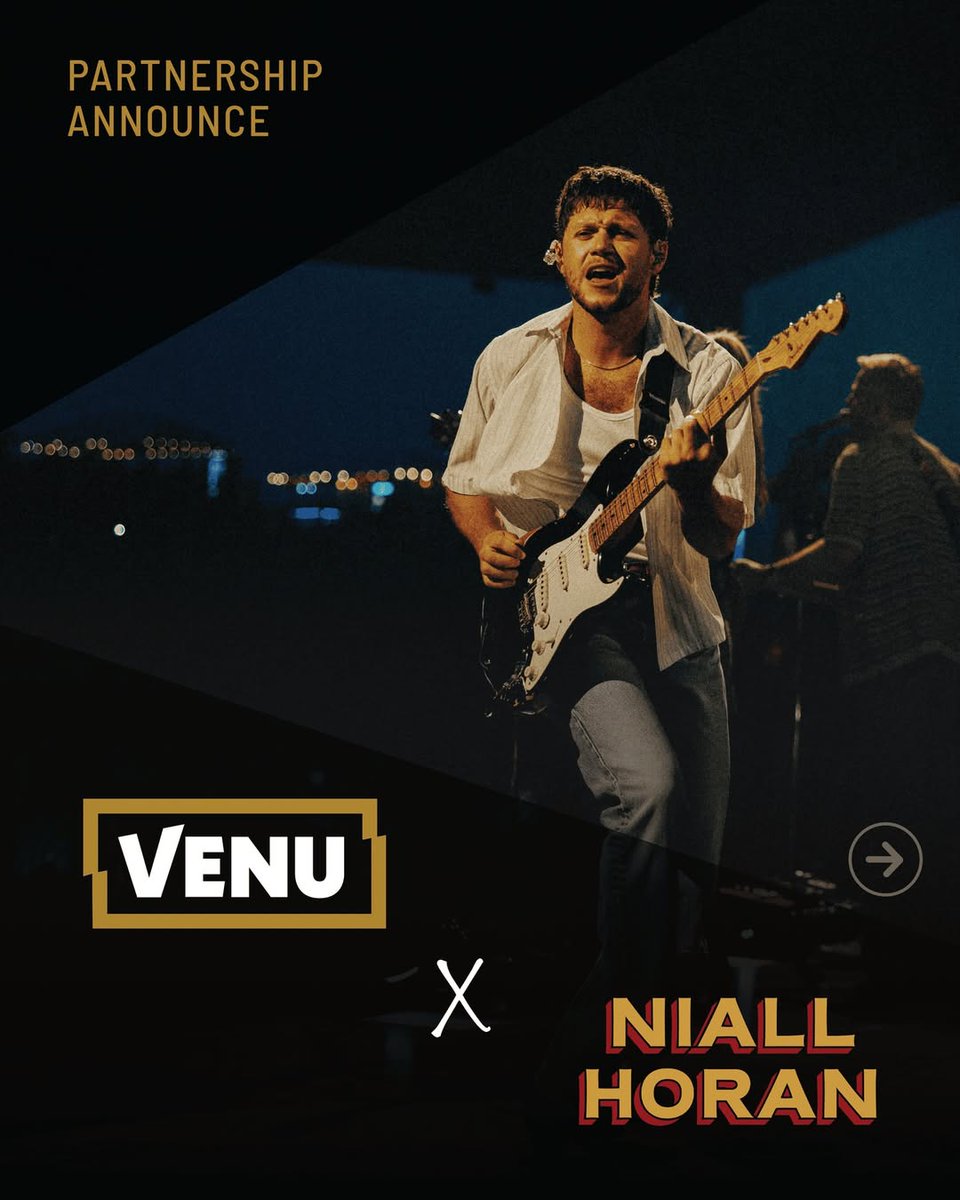
On 13 November 2025, VENU announced that global multi-platinum artist and entrepreneur Niall Horan had joined the company as a shareholder and strategic partner.
Horan’s involvement includes:
- Serving as a founding member of VENU’s Advisory Council, alongside country artist Dierks Bentley.
- Helping shape the company’s fan-first, artist-driven vision for future live-entertainment destinations.
- Bringing artist-side expertise from both his One Direction days and his successful solo career, as well as his entrepreneurial projects (such as his involvement in sports management and venture investing).
In the company’s announcement, Horan emphasised that his career has been built on creating special experiences for fans, and framed the VENU partnership as an opportunity to “push the boundaries” and create better, more immersive environments for both artists and audiences.
What Makes VENU Different?
The live-events world is crowded with venue operators, promoters, and hospitality brands. VENU’s bet is that it can stand out by tightly fusing these elements into a single, fan-centric platform.
1. Fan-First & Artist-Inspired Positioning
VENU leans hard into identity: fan-founded, fan-owned, and artist-inspired. The idea is that artists and fans should be embedded in decision-making, not just treated as customers and suppliers. Bringing on Niall Horan as a shareholder and advisory-council member is a very literal embodiment of that strategy.
2. Destination Venues, Not Just Stages
Each project is designed as an entire destination: you don’t just attend a concert, you arrive at an environment built around live music, premium hospitality, and social experiences. Luxe suites, clubs, restaurants, and curated spaces are there to encourage guests to arrive early, stay late, and spend more.
3. Year-Round “Omni-Content” Strategy
Traditional outdoor venues can be highly seasonal. VENU talks about multi-seasonal, multi-configurational venues with flexible content: concerts, residencies, theatrical productions, branded shows, community events, and more. That allows the company to:
- Drive utilisation of each venue beyond the main touring season.
- Diversify revenue streams beyond standard concert ticketing.
- Create recurring “must-see” content that builds local loyalty.
4. Integrated Real-Estate & Ownership Model
Unlike pure promoters, VENU is heavily invested in the underlying real estate. By owning and developing venues and associated properties, the company aims to capture the upside of both the entertainment business and the property value it creates.
Why Niall Horan’s Involvement Matters
Horan’s partnership with VENU is part of a broader trend in the music industry: artists taking equity stakes and strategic roles in the infrastructure behind live entertainment, not just performing on stage.
His involvement matters for a few reasons:
- Credibility with artists and fans: A globally known artist validating VENU’s model helps attract other performers and partners.
- Creative input: Artists understand what works (and doesn’t) in a venue. That perspective can shape design, fan flow, backstage areas, and the overall live experience.
- Brand amplifier: Horan’s audience and public profile amplify VENU’s story to millions of fans who may one day buy tickets or memberships at its venues.
- Long-term alignment: Because he is a shareholder, his interests are aligned with the company’s long-term growth and brand reputation, not just a single tour cycle.
Opportunities & Risks for VENU
Opportunities
- Scaling a differentiated model: If VENU can replicate its destination-venue formula across multiple markets, it could carve out a unique niche in the US live-entertainment landscape.
- Premium hospitality growth: Sales of Luxe FireSuites and high-end hospitality products have already generated tens of millions of dollars and offer attractive, recurring revenue potential.
- Artist partnerships: Strategic relationships with artists like Niall Horan and Dierks Bentley may lead to exclusive shows, curated events, and content that competitors can’t easily copy.
- Real-estate value creation: Successful venues don’t just sell tickets; they can increase the value of the surrounding land and buildings that VENU controls.
Risks & Challenges
- Ongoing losses during the build-out phase: The company is still not consistently profitable. Continued investment in new venues, content, and infrastructure could keep pressure on earnings.
- Execution risk: Building and operating multiple large venues across different states is complex. Delays, cost overruns, or underperforming sites could weigh on results.
- Market competition: VENU is competing with established giants in live entertainment and hospitality that have deep pockets and long-standing relationships.
- Economic sensitivity: High-end hospitality and premium ticket products can be sensitive to economic cycles and consumer confidence.
What It Means for Fans and Investors
For Fans
If VENU delivers on its promises, fans can expect venues that feel less like generic arenas and more like curated, music-centric destinations, with better sightlines, improved amenities, and more reasons to spend time on site before and after the show.
For Artists
Artists may benefit from venues that are literally designed with their input, plus opportunities to take equity and participate more directly in the value their tours create.
For Investors
VENU represents a high-growth, higher-risk play in the live entertainment and hospitality space. Rapid asset growth, premium product sales, and marquee artist partnerships are positives, but the company’s ongoing losses and capital-intensive model mean it remains a speculative investment that depends heavily on execution.